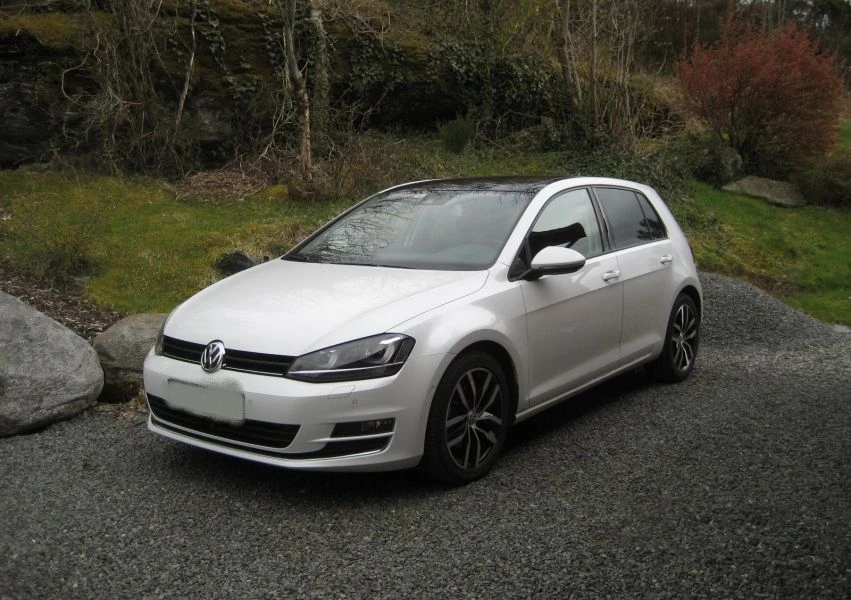
The Mk7 Golf is the most common hatchback on Irish roads for a reason. It is refined, economical and holds its value better than almost anything else in its class. But the 1.6 TDI has a few well-documented gremlins that can turn a bargain into a headache. Here is what you need to know before you commit on DoneDeal.
Overview
The Mk7 Golf arrived in Ireland in 2013 and immediately set the standard for the family hatchback segment. Built on VW's MQB platform, it felt noticeably more premium than the Mk6 it replaced — lighter, more rigid and better equipped. The 1.6 TDI became the go-to choice for Irish commuters thanks to its low road tax and strong fuel economy. It is predominantly bought by families and daily drivers who want brand prestige without the running costs of a larger engine.
Engine & Gearbox
The 1.6 TDI comes in two outputs — 105hp and 110hp — and the difference in real-world driving is negligible. The majority of Irish examples are paired with a 5-speed manual gearbox, which is the safer choice for high-mileage buyers. Some higher-spec models came with VW's 7-speed DSG automatic — a genuinely excellent gearbox when properly maintained, but the dry-clutch DQ200 unit fitted to the 1.6 TDI is more fragile than the oil-bathed DSG found in the 2.0 TDI. DSG servicing is regularly skipped by previous owners and a neglected unit is an expensive fix. Stick to the manual unless you can verify full DSG service history including fluid changes.
Known Faults
Water pump failure is the most commonly reported issue. The water pump on the 1.6 TDI is prone to failing earlier than expected and when it goes it can lead to overheating quickly. If the car has not had the water pump replaced, budget for it and factor it into your offer.
EGR valve fouling is a common problem on Irish examples used mainly for short city trips. The exhaust gas recirculation valve builds up carbon deposits in stop-start driving conditions, causing rough idle, hesitation under load and increased fuel consumption. A diagnostic scan will flag it. Cleaning or replacement is a straightforward job for a VW specialist.
DPF clogging goes hand in hand with city use. The diesel particulate filter needs regular motorway runs to regenerate properly. A blocked DPF is a costly repair and one of the leading NCT failure points on this model in Ireland. Ask how the car has been used — a genuine motorway commuter is a very different proposition to a school-run car.
Fuel injector faults are worth checking but should not be overstated on this generation. The Mk7 uses the updated EA288 engine with improved Bosch injection — significantly better than the injectors that plagued the previous Mk6. Run a diagnostic scan before purchase and check for any pending injector codes, but do not let injector fear put you off an otherwise clean example.
Rear torsion beam bushings wear and produce a creaking sound over speed bumps. Not a serious mechanical issue but a useful negotiation point if you hear it on a test drive.
What to Check on Inspection
Check the passenger footwell for dampness. A well-documented Mk7 weak point is leaking speaker seals that allow water into the footwell. Any damp smell or visible moisture means walk away or negotiate hard — water ingress on the MQB platform causes serious and expensive electrical problems.
Ask for evidence of a timing belt and water pump change. Most Irish specialists recommend doing both together every 5 years or 120,000km — more conservative than VW's current official mileage-only guidance, but widely followed because of the water pump failure risk. If it has not been done, factor the cost into your offer.
Run a diagnostic scan before purchase. A cheap OBD2 reader will show any pending fault codes a seller may have cleared before the viewing. Pay particular attention to EGR, DPF and injector codes.
"The Golf is the benchmark for a reason — but only buy one with a full service history. Without it, you are buying someone else's problem."
NCT Watch Points
The most common NCT failure points on the Mk7 Golf 1.6 TDI are rear coil springs, headlight alignment and emissions failures caused by a blocked DPF. Run your hand around the rear coil springs and feel for any cracks — particularly on higher mileage examples.
Running Costs
Road tax is approximately €180–€190 per year. Real-world fuel economy is strong at 55–60 MPG on a mixed cycle, though this drops noticeably on stop-start city driving. Use a VW specialist rather than a main dealer to keep servicing costs sensible.
What to Pay in Ireland
Budget between €8,500 and €12,500 depending on spec and mileage. Highline models with full VW service history and under 100,000km push toward €12,500 and are worth it. Be cautious of anything priced significantly below €8,000 — the service history will usually explain why.
Verdict
Buy — but only with a full service history. The water pump, EGR, DPF and DSG are all manageable known quantities when you can see they have been addressed. What you want to avoid is a car that has been run cheaply with no documentation. History is everything on this one.
Frequently Asked Questions
Generally yes, but reliability depends heavily on service history. Water pump failure and DPF clogging are the two most common issues on Irish examples. A full service history makes this a solid used buy.
The 5-speed manual is the safer choice. The 7-speed dry-clutch DSG fitted to the 1.6 TDI is more fragile than the oil-bathed DSG in the 2.0 TDI, and DSG fluid changes are frequently skipped. Only buy a DSG if you can verify full DSG service history including fluid changes.
Most Irish specialists recommend changing the timing belt and water pump together every 5 years or 120,000km, whichever comes first. This is more conservative than VW's current official guidance but widely followed because of the water pump failure risk on this engine.
Between €8,500 and €12,500 depending on spec and mileage. Highline models with full service history and under 100,000km push toward the higher end. Be cautious of anything priced significantly below €8,000.